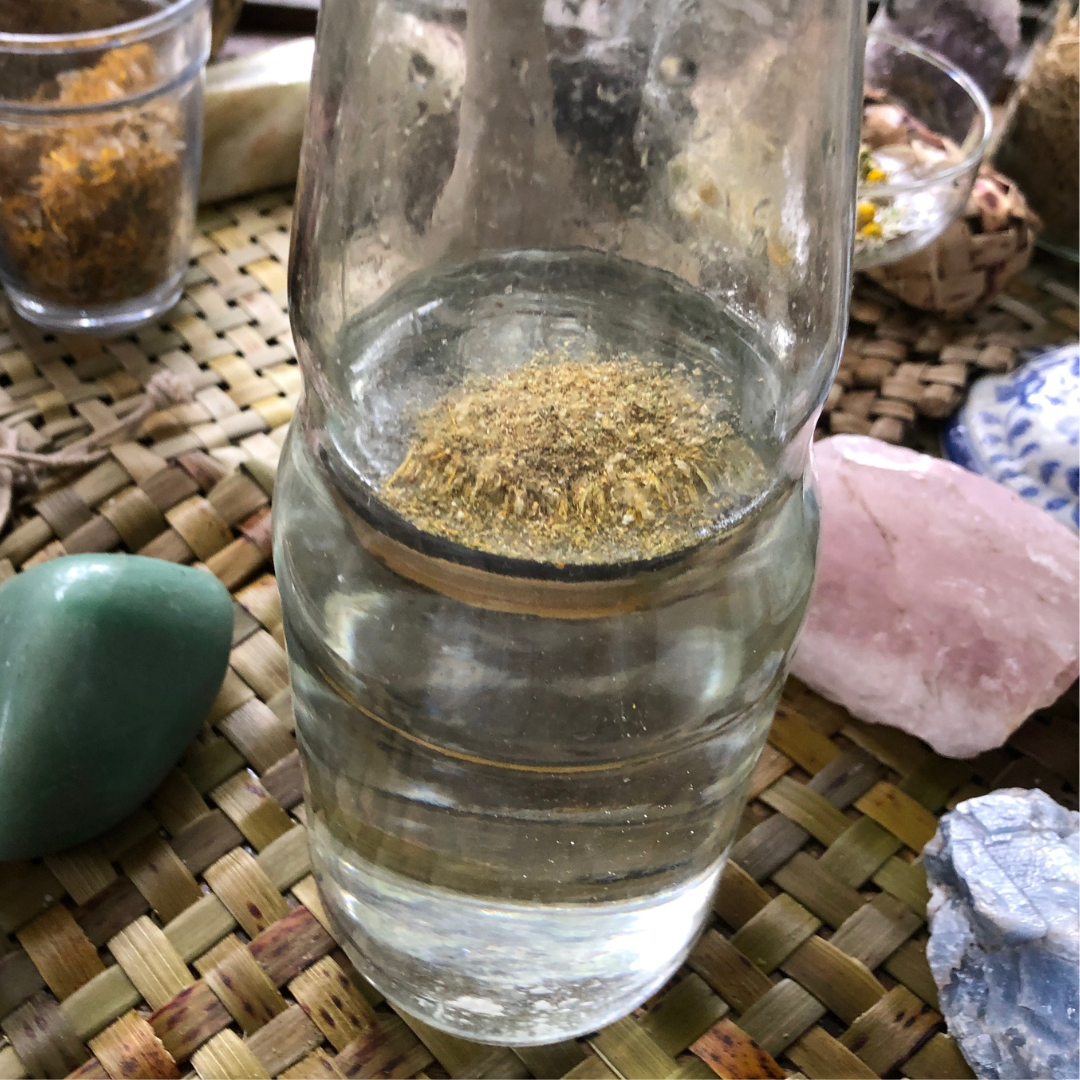
Floral Compost Activator
Flowers are an essential part of biodynamic composting, and within my own gardening, I've always included flowers, often more than you would see in normal edible gardens.
They are there for the bees and for picking to bring in side, but to honest, they are there mostly to provide a sort of 'colour therapy' for my brain. It's like I need to be surrounded by beauty, and I would even suggest that the vegetables themselves enjoy having flowers nearby.
Why a sudden shift in perspective?
I've been a biodynamic gardener since about 2009 - 15 years now, with the last 8 years being devoted to making my own preparations, or as many as I can. It's hard for suburban home gardeners to get hold of a stag's bladder to make the yarrow preparation, and there have been frequent occasions when I've felt like it's more effort than it's worth.
I've sort of trusted that in the natural course of time I'll meet the hunters, the farmers, and also that biodynamic gardening will continuously spread so that we eventually reach the people who can access the animal parts.
In the meantime, I have always advised my customers to grow yarrow, chamomile, dandelion, nettle, and valerian. Just studying the way these plants behave is a big part of becoming a prep-maker - knowing the seasons of each plant, how they taste, and how they are used both in the kitchen and in a herbal, living first aid kit.
It was a few years ago that I first heard the name Maye Bruce, and at the time I had a quick look at her work, but I think in hindsight I must have been in a very dogmatic, purist stage of my biodynamic studies, and Maye's approach seemed to be openly stating it was 'not' biodynamic.
Roll on 2025, and the decision to move house, yet again.
I moved house in 2021 after 10 years in Titirangi, and it nearly broke my heart. Four house moves since then, and I've got a better understanding of what is essential in a home-based biodynamic teaching garden.
As I spend the next few months decluttering my shed and dismantling the garden, it is pretty obvious that I won't be making compost preparations to bury in the ground in autumn and dig up in spring this year.
Maye Bruce's name came up in a biodynamic study session once more, but this time round it feels like diving deep into her methods might just give me a method that can travel with me, and be used at short notice.
I downloaded her book, studied it, and decided to spend a few months immersed in the study of flowers and their influence on composting. Maye talks about how there are many, many useful flowers, and when I saw her include hollyhocks and strawberry flowers in her list, I was quite surprised: these aren't normal herbs mentioned as compost activators anywhere that I've seen.
I love a good research project, and would love to create a community of other people who are exploring this work.
If you'd like to join in, then please get in touch by email at katrina@blueborage.co.nz
Thanks,
Katrina
PS: I want to make this accessible to anyone who is interested, in the spirit of Maye's original work. However, there are costs to hosting online courses on a platform, a business zoom account etc. For those who are able to support the research, then please head to the Blue Borage Ko-Fi page where contributions as low as $5 a month have meaningful impact in the community. Sales of Blue Borage online courses also help fund the research, as does simply hiring me as your compost consultant.